Private art tutoring or group workshops: finding your path
When a painting keeps slipping out of proportion, or every attempt to warm a skin tone ends in a muddy patch, it can be hard to tell what kind of help will move the work forward.
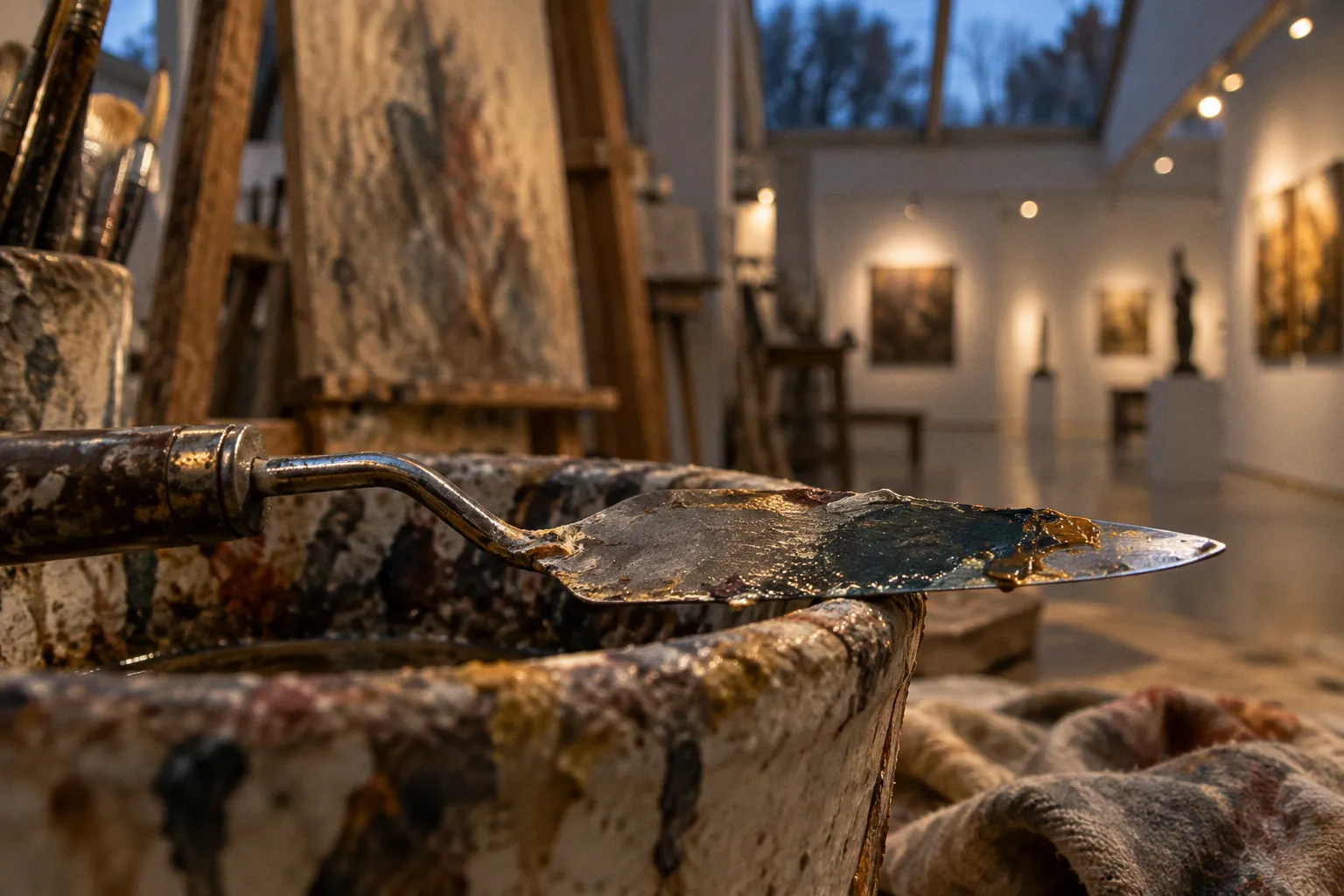
We may need someone to look closely at the exact decision we are making—or a steady studio rhythm that gets us painting often enough to see the pattern ourselves.
That is the practical difference at the heart of private art tutoring vs group workshops. Individual instruction gives the teacher more room to focus on your painting and adapt the pace to your needs. A group workshop brings shared energy, scheduled practice and the useful pressure of seeing other artists wrestle with similar problems. Neither format is automatically better. The right choice depends on what is stuck, what kind of feedback helps you act on it, and how you want professional development to fit into your working life.
Individual mentoring: stay with the problem long enough to see it
In private art tutoring, the lesson can follow the painting rather than a preset sequence. If the drawing is sound but the values have gone flat, you can spend the session pushing the darks and carving out the main forms. If the trouble begins earlier—with a head drifting off-axis, a figure losing its weight, or a composition that feels too evenly spread—the instructor can help you trace the problem back to the decisions that created it.
That kind of attention matters because a visible mistake is not always the source of the difficulty. A muddy passage of paint, for instance, may come from mixing too many colors, but it can also be a value problem: the lights and shadows are too close together, so the form loses its clarity even when the hue is plausible. One-to-one teaching gives you room to slow down at that junction, compare the passage with the rest of the painting, and decide what to change before more paint smudges the surface.
The most useful individual instruction is not simply a teacher demonstrating a technique while you watch. It is a feedback loop: you make a decision, the instructor helps you see what it did, and you try the next move with a clearer purpose. That can be especially valuable when you have a specific technical gap, are preparing a portfolio, or need guidance that does not fit neatly into a general class plan.
Personal attention is most valuable when it helps you understand the decision behind the brushstroke—not just copy the correction.
There is a trade-off. A private lesson can offer a more tailored pace, but it also asks you to bring something concrete to the table: a painting in progress, a question you have been circling, or a goal you can put into visual terms. Without that focus, the hour can become a pleasant conversation about art rather than a meaningful shift in your practice. You do not need to arrive with a perfectly worded diagnosis. It is enough to know where the painting begins to resist you.
Group workshops: practice in company
The advantages of a group art workshop are not limited to having other people in the room. A scheduled class can help establish a regular studio rhythm, and that rhythm is often what turns good intentions into sustained work. You arrive, set up, begin, and stay with the task for a defined stretch of time. The shared energy of the room can make it easier to keep going when a drawing feels awkward or the first color pass has not yet found its footing.
A group also gives you more than one example of the lesson in action. As the instructor responds to different paintings, you can watch the same principle meet different problems: one student may need to simplify a busy composition; another may need to push the value contrast; someone else may be overworking a passage that would benefit from being left alone. You begin to recognize that a technique is not a recipe. It is a tool whose effect depends on what the painting needs.
That does not mean every group class will give you direct feedback at exactly the moment you want it. The instructor’s attention has to move among participants, and the schedule may be built around a shared subject or exercise. If you need sustained help with a complex portfolio question or a technical issue that affects almost every decision you make, the group format may leave you wanting a longer conversation.
Still, working alongside other painters can be a strong antidote to the isolation of the studio. You see unfinished work, false starts and revision as ordinary parts of painting rather than private evidence that you are doing something wrong. That shift can help you take more useful risks: block in the large shapes, try a less timid value range, or let a passage remain unresolved long enough to judge it honestly.
Cost and schedule: compare the actual offer
Group teaching often costs less per person because the instructor’s time is shared across several participants. The available research includes local examples of roughly CAD $65 for a single group class, CAD $220 for an eight-class monthly membership, and $200 for a package of five three-hour classes. These are examples, not a universal price guide: location, class length, materials, instructor experience and group size all affect what a course costs.
Private tuition is harder to compare from a headline price alone. The fee may buy a full lesson devoted to your work, but the value depends on how much useful attention you receive and whether the session is designed around your goals. A lower-cost group class may be the better investment if what you need is regular practice and a supportive structure. A private session may be worth the additional cost when one unresolved issue is holding up several paintings or when you need focused portfolio guidance.
| What you are weighing | Private art tutoring | Group workshop |
|---|---|---|
| Feedback | Direct attention to your work and questions | Instructor attention shared across participants |
| Pace | Can be adjusted to your needs | Usually follows a shared schedule or exercise |
| Studio dynamic | Quiet focus and a close working exchange | Shared energy, peer examples and conversation |
| Typical strength | Targeted problem-solving and tailored guidance | Consistency, structured practice and community |
| Cost structure | Fee concentrated on individual instruction | Cost shared across multiple participants |
Scheduling deserves the same practical attention as price. A workshop that meets regularly can create momentum, but only if the time and travel are realistic for you. A private lesson may be easier to fit around an irregular schedule, yet it is still worth asking what you will work on between sessions. In either format, learning does not happen only while the instructor is speaking. The practice you carry back into your own studio is where a new way of seeing becomes part of your hand.
In-person or online: where does the feedback happen?
For painting, some corrections are easier to make when the instructor can see the work in person. Brush control, paint consistency, color mixing and perspective can be discussed while the problem is visible on the surface. The teacher may notice a hesitation in the mark, a value that has quietly flattened, or an edge that is doing more work than you intended—and help you respond before the passage is buried under another layer.
In-person teaching also puts you in a shared physical space, where you can see how other painters set up, mix, revise and manage a working session. That can be part of the lesson even when nobody names it. For artists who learn by observing another person’s hand and choices, the studio itself offers useful information.
Online workshops remove the need to live near the instructor and can make it possible to revisit recorded material later. That is helpful when you want to pause over a demonstration or return to a technique while working independently. But online access is not the same as continuous, close feedback on your own painting. The format may save travel and studio costs while asking you to be more deliberate about showing the work, asking questions and setting up a space where you can practise.
Before choosing a digital class, look beyond the word “masterclass” and consider how instruction actually happens. Is there time for questions? Can the teacher see individual work, or is the course mainly a demonstration? Are sessions recorded, and can you return to them? These details shape the experience more than the platform name does. A polished video can explain a process clearly; it cannot, by itself, tell you why your figure is tipping or why the shadows have become one undifferentiated mass.
Match the format to the work in front of you
Choosing between private and group art classes becomes easier when you name the job you want the learning environment to do. If you are trying to repair a recurring technical issue, direct mentoring may help you identify the cause instead of repeatedly patching the surface. If you need to draw more regularly, build confidence working from observation, or learn alongside other painters, a group may give you the structure and company to keep returning.
Consider the choice through a few practical questions:
- Is the problem specific or broad? A narrow issue—such as losing the planes of a face or struggling to organize a portfolio—may benefit from individual attention. A broader goal, like building a consistent drawing habit, can fit naturally into a workshop.
- How do you respond to feedback? Some of us need an instructor to stay with one passage until the correction makes sense. Others learn by watching several approaches and trying the idea in our own work.
- What kind of accountability helps? A regular class supplies a shared appointment. Private teaching can provide focused direction, but you will need to carry that direction into the time between lessons.
- What can you afford to sustain? Compare the total cost and schedule of the actual options, not an imagined average. A format you can attend consistently may serve you better than an intensive one you cannot maintain.
- What does the teaching include? A group course with thoughtful individual feedback may meet more of your needs than its label suggests; a private session without a clear working focus may deliver less than you hoped.
A mixed path can make sense, too. You might use a workshop to establish routine and explore new subjects, then book individual instruction when a particular painting or portfolio decision needs closer attention. Or you may begin with a private lesson to understand a technical gap, then take that clearer focus into a group course where you can practise it over time. The formats are not competing identities; they are different tools for different stages of learning.
Professional development for artists is not a matter of collecting the most impressive course titles. It is about creating conditions in which you can see more clearly, make a decision, and learn from what happens next. If the painting needs close diagnosis, seek a teacher who can stay with it. If your practice needs rhythm, find a room that helps you return. Choose the setting that meets the work where it is now—and leave yourself enough room to change direction when the next problem comes into view.